

You want a straightforward answer: dental implants can function like a long-term investment because they often last for decades and help prevent bone loss that leads to additional expenses later. When properly placed and maintained, implants usually avoid the repeated adjustments and replacements common with dentures or traditional bridges, making the higher upfront cost more economical over time.
This article explains how implants work, what maintenance or potential complications could affect total cost, and how they compare with other tooth-replacement options. If you are considering a full-arch solution, learning more about All-on-4 dental implants in Fairfax, VA can help you evaluate whether this streamlined, fixed option provides the durability and value you’re looking for in a long-term restoration.
Understanding Dental Implants
Dental implants replace missing teeth with a structure that mimics a natural tooth root and supports a visible crown. You’ll learn what implants are, the parts that make them work, and the biological process that secures them in your jaw.
What Are Dental Implants?
A dental implant is a small post, typically made of titanium or zirconia, surgically placed into your jawbone to act as an artificial tooth root. It provides a stable anchor for a crown, bridge, or denture and aims to restore chewing function and appearance.
Implants differ from dentures and bridges because they integrate with bone rather than resting on gums or adjacent teeth. This integration helps preserve jawbone volume and prevents the bone loss that follows tooth extraction.
You should expect a treatment plan that may include 3D imaging, medical evaluation, and staged procedures. Costs and timelines vary with the number of implants, need for bone grafting, and the type of final prosthesis.
Components of a Dental Implant
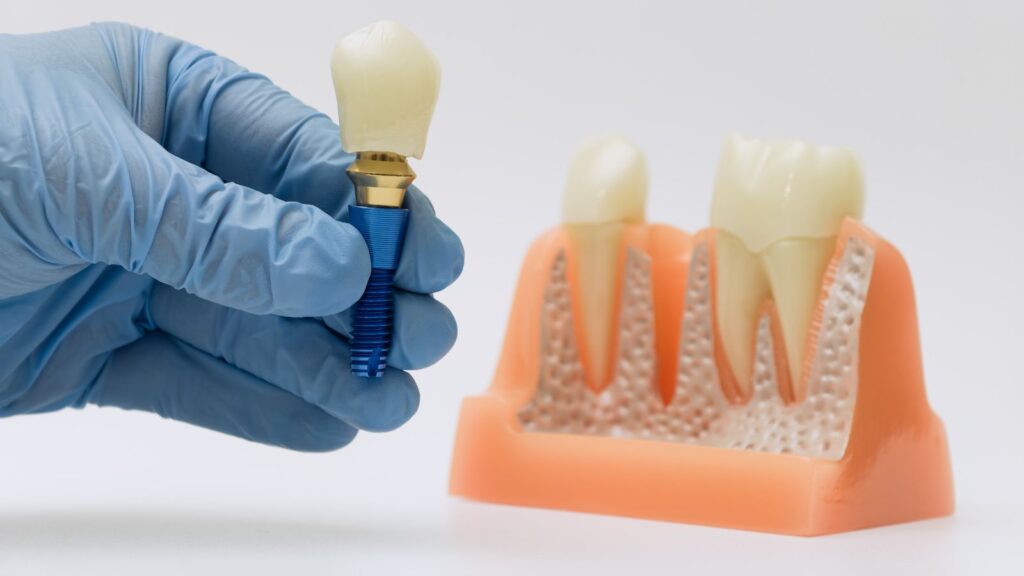
A complete implant restoration has three main parts: the implant post, the abutment, and the prosthetic tooth (crown, bridge, or denture).
- Implant post: the root-like screw inserted into bone (titanium or zirconia).
- Abutment: the connector piece that joins the post to the prosthetic.
- Prosthetic: the visible tooth replacement, custom-made from porcelain, zirconia, or acrylic.
Materials matter: titanium integrates well with bone; zirconia offers a metal-free option and can be preferable for esthetics or metal sensitivities. Your dentist will choose sizes and shapes based on jaw anatomy and the load expected from chewing.
How Dental Implants Work
After the implant post is placed, your bone grows around it in a process called osseointegration, which typically takes several months. This biological fusion creates the mechanical stability that lets the implant function like a natural root.
Once osseointegration is sufficient, the abutment attaches to the post and the final prosthetic is fitted. The final restoration distributes chewing forces and restores normal function, reducing strain on neighboring teeth.
If your jaw lacks sufficient bone, your dentist may recommend bone grafting before or during implant placement. Follow-up care includes regular hygiene, periodic exams, and avoiding habits that overload the implant, such as heavy clenching or smoking.
Evaluating Dental Implants as a One-Time Investment
Dental implants require a larger upfront payment but can reduce long-term replacement and maintenance costs. You should weigh initial fees, expected lifespan, and personal risk factors to decide if implants act as a one-time financial and clinical solution for you.
Initial Costs and Long-Term Value
Expect upfront costs that commonly include the implant fixture, abutment, crown, imaging, and any preparatory surgery such as bone grafting. Typical single-tooth implant fees in the U.S. often range from several thousand dollars; prices vary by clinic, region, and complexity.
Consider long-term value by comparing recurring costs for alternatives. Dentures and bridges may cost less initially but often need replacement, relining, or replacement crowns every 5–15 years. Factor in indirect savings too: implants preserve jawbone, reduce future bone-graft needs, and can lower the risk of adjacent tooth damage.
Ask your dentist for a written cost breakdown and a projected timeline for possible repairs or component replacement. Check insurance coverage and financing options to make the upfront expense manageable.
Implant Longevity and Durability
Implant fixtures (titanium or zirconia posts) are designed to integrate with bone and can last decades with proper care. Studies and clinical experience commonly show many implants functioning well for 15–25 years or longer when you maintain oral hygiene and attend regular dental visits.
Prosthetic parts—crowns, abutments, and screws—are more likely to require repair or replacement than the implant body itself. Expect occasional crown replacement due to wear or fracture, typically after 10–15 years depending on materials and chewing forces.
You must maintain routine hygiene and avoid habits that increase risk, like heavy smoking or bruxism. Regular professional cleanings and prompt treatment of peri-implant inflammation improve durability.
Factors Influencing Implant Lifespan
Biological factors: bone quality, systemic health (diabetes, osteoporosis), and history of periodontal disease directly affect osseointegration and long-term stability. Poor bone volume may require grafting, which adds procedures and influences outcomes.
Behavioral and mechanical factors: smoking, poor oral hygiene, teeth grinding, and high bite forces increase failure or complication risk. Your dentist may recommend a nightguard, smoking cessation, or targeted hygiene plans.
Prosthetic and surgical variables: implant brand, surface technology, surgical technique, and the skill of the clinician matter. Higher-quality components and proper placement reduce complication rates. Follow-up care frequency and your ability to access timely repairs also change whether implants function as a near one-time investment.
Maintenance and Potential Additional Costs
You will need routine care for implants and might face repair, replacement, or other dental expenses over time. Expect costs tied to professional cleanings, occasional component replacement, and any preparatory treatments that were not part of the initial placement.
Regular Care Requirements
You must keep implants clean to prevent peri-implantitis and preserve surrounding bone. Brush twice daily with a soft brush and low-abrasive toothpaste, and floss or use interdental brushes around the implant abutment every day.
Schedule professional maintenance visits every 3–6 months. At these visits your dentist or hygienist will check implant stability, remove hard deposits with nonmetal instruments, and take periodic X-rays to monitor bone levels.
If you smoke or have diabetes, you will need more frequent monitoring because those conditions raise the risk of inflammation and implant loss. Good oral hygiene and regular visits lower long-term costs by reducing the chance of complex treatments.
Possible Repairs or Replacements
Implant fixtures (the titanium post) rarely need replacement if osseointegration succeeds. However, crowns, abutments, and screws can fracture, loosen, or wear and typically require repair or replacement over the years.
Common interventions include replacing a worn crown, retightening or replacing an abutment screw, and remaking a crown due to chipping or esthetic changes. Expect single-crown repairs or replacements to carry material and lab costs that vary by your clinic and crown type.
If peri-implantitis develops and bone loss occurs, you might need surgical debridement or regenerative procedures. Those treatments can substantially raise expenses compared with routine maintenance and sometimes require removing and later replacing the implant.
Associated Ongoing Dental Expenses
Beyond maintenance and component repairs, other recurring costs can arise from related dental care. Periodic X-rays, professional cleanings, and any soft-tissue treatments around implants incur fees that add up over time.
Preparatory or adjunctive procedures—such as bone grafting, sinus lifts, or extractions performed before implant placement—may also create future follow-up costs if complications arise. Likewise, management of systemic health issues that affect oral health (like periodontal disease) can increase the frequency and cost of dental visits.
Insurance coverage varies; some plans cover a portion of implant crowns or maintenance, while others treat implants as elective. Confirm coverage and get written estimates so you can budget for both routine upkeep and less frequent, higher-cost interventions.
Comparing Dental Implants With Other Tooth Replacement Options
Dental implants act as surgically placed titanium roots that support crowns or bridges, resist bone loss, and usually require no change to adjacent teeth. Bridges and dentures replace visible tooth structure but rely on nearby teeth or gums for support and often need periodic adjustment or replacement.
Implants vs Bridges and Dentures
If you want a fixed solution that preserves jawbone, implants attach directly to bone and stimulate it during chewing. Bridges anchor to adjacent teeth and require those teeth to be filed down; they can last 10–15 years but risk decay or fracture of the supporting teeth. Dentures sit on gums and cover multiple teeth; they restore appearance and chewing function but can slip, cause sore spots, and accelerate bone loss where teeth are missing.
Implants let you chew nearly as you did with natural teeth and avoid dietary restrictions common with dentures. Bridges can be faster and less expensive up front, but you may replace them more often. Dentures offer lower initial cost and non-surgical placement, yet they typically need relines and replacement every 5–8 years.
Cost-Effectiveness Over Time
Upfront implant treatment usually costs more than a bridge or denture for a single tooth or small span. Factor in longevity: a well-maintained implant often lasts decades, while bridges and dentures commonly require replacement or repair every 5–15 years. Over 10–20 years, cumulative costs for bridges/dentures — including relines, repairs, and possible replacement of adjacent teeth — can exceed the higher initial implant price.
Consider these specifics when comparing options:
- Lifetime horizon: implants may lower long-term costs by avoiding bone grafts and further restorative work.
- Maintenance: bridges need flossing under pontics; dentures require nightly cleaning and adhesive.
- Risks: implants need sufficient bone and surgical healing; failures occur but are less frequent than long-term bridge/denture complications.